
Workout Plan for Men Over 40
A twelve-week strength program built for lifters over forty, with joint-friendly exercise selection, three sessions a week, and enough recovery built in that you can actually sustain it.
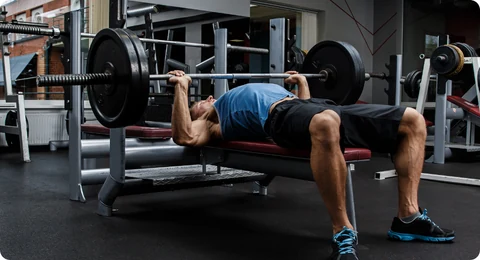
Program Overview
Training over forty is not about doing less, it is about doing the right things and recovering properly between them. Strength and muscle mass both decline with age unless you train to keep them, and resistance training remains the single most effective intervention available. Forty is not a cliff edge, and nothing about your physiology changes overnight at a birthday. What does shift, gradually, is how fast you recover between hard sessions and how much load your joints are happy under. This twelve-week program runs three sessions a week with a full day between each and two at the weekend. Exercise selection leans on dumbbells, cables, and controlled ranges rather than maximal barbell work, which keeps the training effect high and the joint stress low. Every exercise includes a form video.
New to structured training? Start with our 3-day full body plan for beginners. If you want more frequency once these twelve weeks are done, our intermediate upper lower split steps it up.
Who Is This For?
This program suits you if:
- You are over forty and want to build or hold onto strength and muscle
- You have had a niggle or two and want exercise selection that respects that
- You can commit to three sessions a week for twelve weeks
- You would rather progress steadily than chase personal records every session
Browse everything at this level on our intermediate programs page.
Weekly Schedule
Phase 1: Rebuild the Base (Weeks 1-6)
Six weeks of moderate loads and higher reps to build tissue tolerance before you push the weights. Warm up properly, which at this stage means five minutes of easy cardio plus a couple of light sets of the first movement. Stop every set two reps short of failure.
Two reps in reserve on everything. The goal for six weeks is consistency and tissue tolerance, not maximum weight.
Press two dumbbells from chest level to lockout above your chest.
Pull the bar down to your upper chest by driving the elbows down and back.
Press a single dumbbell overhead while bracing hard against the rotation.
With one knee and hand on a bench, row the dumbbell to your hip.
Pull the dumbbells toward your face with high elbows, squeezing the rear delts.
Curl with a neutral, palms-facing grip, alternating arms.
Hold one dumbbell at chest height and squat between your knees.
Hold the barbell at hip height, push your hips back and lower until you feel a hamstring stretch.
With your rear foot elevated on a bench, lower into a split squat and drive up.
Rise onto the balls of your feet and lower for a full stretch.
On all fours, extend the opposite arm and leg while keeping the torso still.
Press dumbbells from an inclined bench, lowering to upper chest level.
Pull the handle to your midsection, keeping the torso upright.
Seated, raise the dumbbells out to your sides to shoulder height.
With cables crossed from opposite pulleys, push down and extend both elbows.
Hold a band at shoulder height and pull it apart until your arms are wide.
An easy walk to move blood through the muscles you trained without adding fatigue.
Gentle mobility for whichever joints felt stiff getting into position last session.
Phase 2: Build Strength (Weeks 7-12)
Loads go up and reps come down on the main movements while the accessory work stays in higher rep ranges. The barbell appears on the lower day, but from a box, which caps the depth and keeps the bottom position controlled. If anything flares up, swap back to the Phase 1 version of that movement rather than pushing through.
Add weight only when you finish every set at the top of the rep range with clean technique. Age changes recovery, not the principle.
Press two dumbbells from chest level to lockout above your chest.
Use the counterweighted machine to perform pull ups with assistance.
Press two dumbbells from shoulder height to lockout overhead.
Hinge forward and row both dumbbells to your lower ribs.
Hinged forward with cables crossed, open the arms wide against the resistance.
Lie back on an incline bench and curl with the arms hanging behind the body.
Squat back to a box set at or just below parallel, pause briefly, then stand.
Stagger the feet with most weight on the front leg and hinge at the hip.
Seated in the machine, lower the platform toward your chest and press it back out.
Rise onto the balls of your feet and lower for a full stretch.
Kneeling at a high pulley, crunch down by flexing the spine, not the hips.
Press dumbbells from an inclined bench, lowering to upper chest level.
Row a single handle to your side, allowing a longer range through the torso.
Raise the dumbbells out to your sides to shoulder height with a soft elbow bend.
Push a rope attachment down and split the ends apart at the bottom.
Row, rotate the arms up, then press overhead in one continuous sequence.
An easy walk to move blood through the muscles you trained without adding fatigue.
Gentle mobility for whichever joints felt stiff getting into position last session.
Nutrition Guidance
Recovery is the limiting factor across these twelve weeks, and nutrition is most of recovery. Our macro calculator sets your calorie and protein targets, and our recipes make hitting them easier. For more depth, read building muscle while minimizing fat gain and why you are always hungry on a diet.
The Basics
- Calories: Eat at maintenance or very slightly below. Big deficits stop the muscle gain, surpluses stop the fat loss. Our macro calculator sets your starting point.
- Protein: 1.6 to 2.2g per kg of bodyweight daily, and do not compromise here. Recomposition depends on it more than any other goal. Browse our recipes for ideas.
- Protein timing: Spread your intake across three or four meals rather than loading it into one.
- Sleep: Non-negotiable here. Recomposition has the smallest margin for error of any goal.
Track honestly for a fortnight before judging whether it is working. Recomposition is slow by nature.